

Shortness of breath
Breathlessness may occur during exercise, at rest or during a flare-up. Read more about breathlessness assessment .
Specialist respiratory assessment for airway disease, helping investigate symptoms, clarify possible causes and guide appropriate treatment based on your clinical findings.
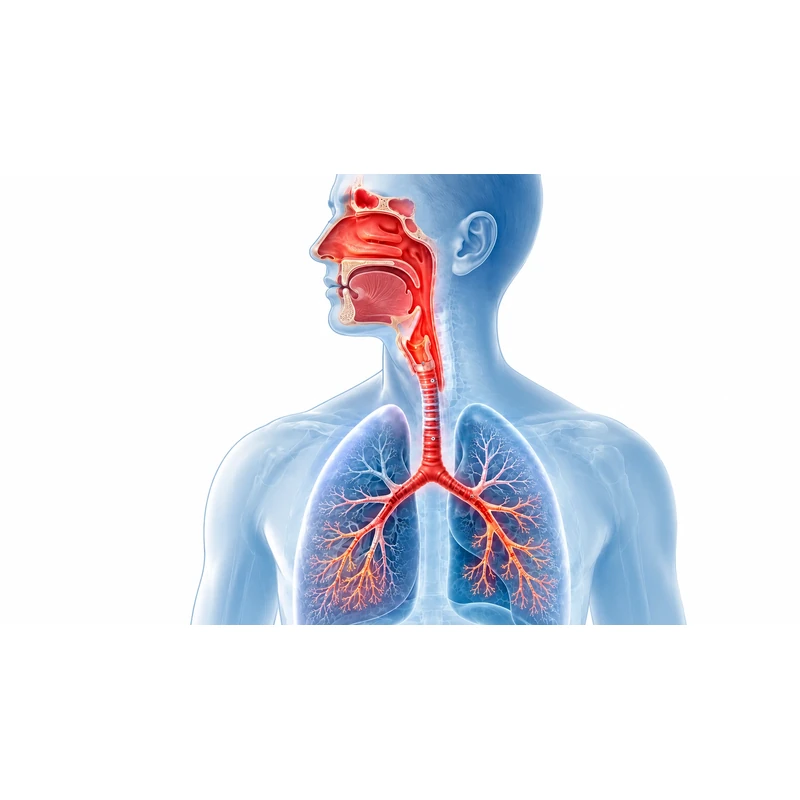
The airways are the passages that carry air from the atmosphere into and out of the lungs. They extend from the nose and throat to progressively smaller tubes deep inside the chest.
The upper airways include the nose, nasal passages, throat and larynx. Below the larynx, the lower airways include the trachea (windpipe), the main bronchi and progressively smaller bronchioles.
As the bronchi divide, they become narrower and eventually lead through tiny respiratory passages to the alveoli — microscopic air sacs where oxygen passes into the blood and carbon dioxide leaves it.
Symptoms depend on which part of the airway is affected and whether the problem involves inflammation, narrowing, infection, mucus retention or dynamic collapse. Some symptoms are persistent, while others fluctuate or occur in episodes.
Breathlessness may occur during exercise, at rest or during a flare-up. Read more about breathlessness assessment .
Wheeze is usually a whistling or musical breathing sound associated with narrowed airways. Persistent or unexplained wheezing can be investigated to identify its cause.
Stridor is a harsher breathing sound that can indicate narrowing of the upper or central airway. New stridor, particularly with significant breathing difficulty, requires prompt medical assessment.
Cough may be dry or productive and can reflect airway inflammation, infection or mucus retention. Persistent symptoms may benefit from specialist chronic cough assessment .
A feeling of tightness or restriction can occur when the airways narrow, particularly in conditions such as asthma, although chest discomfort can have other causes.
Increased sputum, difficulty clearing mucus or recurrent infections can occur when normal airway clearance is impaired, particularly in bronchiectasis and some structural airway disorders.
Book a consultation with Dr Ricardo José for specialist respiratory assessment, investigation of the likely cause and personalised treatment planning.
Persistent or recurrent airway symptoms are worth assessing, particularly when they interfere with sleep, exercise or everyday activities. Rapidly worsening or severe breathing problems need urgent care rather than waiting for a private appointment.
Call 999 for severe breathing difficulty, including if you are gasping, choking or unable to speak normally because of breathlessness, or if there is collapse, severe confusion, blue or grey lips or severe chest pain. Do not wait for a private consultation in a medical emergency.
Airway disorders do not all behave in the same way. Some are acute and infection-related, some cause variable episodes of airway narrowing, and others produce long-term structural or progressive changes.
Tracheomalacia describes weakness of the tracheal wall. In tracheobronchomalacia or excessive dynamic airway collapse, the trachea or main bronchi may narrow excessively during breathing out. Symptoms can include cough, breathlessness, difficulty clearing mucus and recurrent infection. Read more about excessive dynamic airway collapse .
Tracheitis means inflammation of the windpipe. Causes and severity vary and can include infection or airway irritation. Symptoms need to be interpreted in the wider clinical context.
Bronchitis is inflammation of the bronchi. Acute bronchitis commonly accompanies a respiratory infection, while chronic bronchitic symptoms can occur as part of COPD. Persistent symptoms may require assessment for another airway problem or recurrent chest infection .
Bronchiectasis causes permanent abnormal widening of the bronchi. Mucus can be harder to clear, increasing the tendency to chronic cough and recurrent infections. Learn more about bronchiectasis diagnosis and treatment .
Chronic obstructive pulmonary disease can involve the small airways, chronic bronchitis and emphysema in varying proportions. Read more about COPD diagnosis and treatment .
Asthma is associated with variable respiratory symptoms and variable narrowing of the airways. Symptoms such as wheeze, breathlessness, cough and chest tightness may come and go. Learn more about asthma diagnosis and treatment .
There is no single cause of airway disease. The relevant factors depend on the condition, and more than one mechanism may be present in the same person.
Inflammatory pathways are central to asthma and may contribute to symptoms in other airway disorders. Allergens, respiratory infections and environmental exposures can trigger symptoms in susceptible people.
Tobacco smoke is an important risk factor for COPD and chronic airway irritation. Occupational dusts, fumes, air pollution and other inhaled irritants may also contribute to respiratory symptoms.
Viruses and bacteria can produce acute airway inflammation and trigger exacerbations of established asthma, COPD or bronchiectasis. Recurrent infections can sometimes suggest impaired mucus clearance or structural airway disease.
Bronchiectasis changes the structure of the bronchi and can interfere with normal mucus clearance. Some large-airway disorders can also make effective clearance of secretions more difficult.
In selected patients, recurrent airway problems may be associated with immune deficiency, allergic or fungal disease, disorders of ciliary function, autoimmune disease or other underlying conditions.
Reflux, swallowing problems, upper-airway disease and aspiration can contribute to cough or recurrent respiratory symptoms in some patients. Several causes may coexist.
Dr Ricardo José uses a structured, patient-centred approach. Depending on your symptoms, examination and clinical history, investigations may include lung-function tests, imaging, airway-inflammation measurements, microbiology or other targeted tests.
Symptoms, timing, triggers, sputum, infections, smoking and exposure history, previous diagnoses and current treatment are reviewed carefully.
Previous scans, lung-function results, microbiology and blood tests can help show how the problem has evolved and may avoid unnecessary duplication.
Tests are selected according to whether the concern is airflow obstruction, inflammation, structural disease, infection, airway collapse or another diagnosis.
Results are interpreted alongside your clinical history before agreeing an appropriate treatment and follow-up plan.
Dr Ricardo José asks about cough, wheeze, breathlessness, chest tightness, sputum, infections, exercise limitation and noisy breathing. Examination can help direct subsequent investigations.
Spirometry can identify airflow obstruction and is important when asthma or COPD is being considered. Additional lung-function tests or flow-volume loops may provide further information when appropriate.
Fractional exhaled nitric oxide, or FeNO, can provide evidence of type 2 airway inflammation in the appropriate clinical setting. Read the FeNO testing guide .
Chest X-ray can provide an initial overview, while CT gives more detailed information about the lungs and airways and can identify structural abnormalities such as bronchiectasis. Learn about respiratory imaging and CT scanning .
If you produce sputum or experience recurrent infections, samples may be useful for identifying bacterial, mycobacterial or fungal organisms and helping guide further management.
Selected blood tests may assess inflammation, eosinophils, allergy, immune function or another possible underlying cause.
Bronchoscopy is not necessary for every airway problem. In selected cases it permits direct examination of the central airways and collection of respiratory samples.
When airway findings do not fully explain cough or breathlessness, additional investigation may be appropriate to consider cardiac, upper-airway or other respiratory causes.
Treatment depends on the diagnosis, severity of symptoms, investigation results and your wider health. Management is tailored to the underlying condition rather than treating every airway symptom in the same way.
Management differs between asthma, COPD, bronchiectasis, infection and central airway disorders. Establishing the likely diagnosis helps guide appropriate treatment.
Bronchodilator or anti-inflammatory inhalers may be appropriate for conditions such as asthma or COPD. Treatment is selected following assessment rather than prescribed solely from symptoms.
Where bacterial infection is suspected, antibiotics may be appropriate after clinical assessment and, where useful, sputum testing. Antibiotics are not required for every cough or airway flare-up.
Patients with bronchiectasis, retained secretions or selected large-airway disorders may benefit from techniques designed to improve mucus clearance.
Depending on the condition, management may include pulmonary rehabilitation, appropriate physical activity, smoking cessation, vaccination and strategies to reduce respiratory exacerbations.
More complex airway disease may require respiratory physiotherapy or input from other specialist disciplines where clinically relevant.
Airway symptoms often overlap between respiratory conditions. Specialist assessment can help clarify whether symptoms are related to asthma, COPD, bronchiectasis, infection, central airway disease or another respiratory problem.
Dr Ricardo José provides specialist respiratory assessment for persistent, recurrent or unexplained airway and breathing symptoms.
Symptoms and existing results are assessed together, with targeted investigations used where they can help distinguish between alternative or overlapping conditions.
Testing is selected according to your symptoms, medical history, examination and previous respiratory investigations.
Specialist review can be useful when cough, wheeze, breathlessness, sputum or recurrent infections have several possible explanations.
Depending on the clinical problem, assessment may incorporate lung-function testing, imaging, microbiology, blood tests and other appropriate investigations.
More complex cases may benefit from respiratory physiotherapy or other specialist input, depending on the diagnosis and individual clinical needs.
You can also learn more about Dr Ricardo José and his respiratory practice.
Patient experiences and independently available reviews can be read on the London Chest Specialist website and on Dr Ricardo José's Doctify profile.
Not exactly. Lung disease is a broad term covering conditions affecting different parts of the respiratory system. Airway disease specifically refers to disorders involving the passages that conduct air, such as the trachea, bronchi and bronchioles.
Wheeze is usually a musical or whistling sound associated with narrowing of the lower airways. Stridor is generally a harsher sound associated with narrowing higher in the respiratory tract or central airway.
Yes. Airway disorders may cause cough, breathlessness, mucus production, recurrent infection, chest tightness or exercise limitation without obvious wheeze.
Depending on the suspected condition, tests may include spirometry, FeNO, additional lung-function testing, chest imaging, sputum microbiology, blood tests and occasionally bronchoscopy or specialist tests.
CT can provide detailed images of airway structure and may identify bronchiectasis, airway-wall abnormalities and other lung changes. Some airway disorders are more functional or variable, so imaging is interpreted alongside other investigations.
It depends on the diagnosis. Some acute problems resolve completely, whereas asthma, COPD, bronchiectasis and structural airway disorders may require longer-term monitoring and treatment.
Recurrent infections can have several causes. Bronchiectasis, impaired mucus clearance and other respiratory or immune conditions are among the possibilities that may need consideration in selected patients.
If available, bring a current medication and inhaler list together with previous lung-function results, radiology reports, scan access, microbiology results and relevant blood-test results.
Arrange a private consultation with Dr Ricardo José for specialist respiratory assessment. Your symptoms, previous investigations and medical history can be reviewed before deciding whether further testing or treatment is appropriate.