
Understanding environmental exposure and NTM lung disease
Nontuberculous Mycobacteria (NTM): Where Did I Get It?
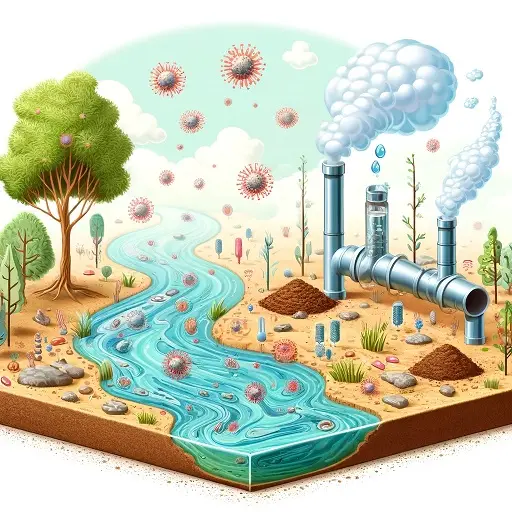
Nontuberculous mycobacteria are naturally present in water, soil, dust and damp built environments. For most people, exposure causes no illness. NTM pulmonary disease usually develops when environmental exposure occurs alongside susceptible airways, impaired mucus clearance or altered immune defence.
- Water systems
- Soil and dust
- Shower aerosols
- Biofilms
- Bronchiectasis
- Healthcare exposure
- Risk reduction
Environmental exposure is very common
NTM occur naturally in water, soil and dust. Most exposed people never develop infection or NTM pulmonary disease.
The exact source is rarely identifiable
Although water, soil, plumbing and aerosols are recognised sources, it is usually impossible to prove where an individual acquired NTM.
What are nontuberculous mycobacteria?
Nontuberculous mycobacteria, usually shortened to NTM, are a diverse group of bacteria found naturally in the environment. They do not include Mycobacterium tuberculosis, which causes tuberculosis, or Mycobacterium leprae, which causes leprosy.
More than 190 NTM species and subspecies have been recognised, although only a proportion regularly cause human disease. Common pulmonary pathogens include the Mycobacterium avium complex, Mycobacterium kansasii, Mycobacterium xenopi and Mycobacterium abscessus.
NTM can cause lung disease, skin and soft-tissue infection, lymph-node infection, infection around medical devices and, occasionally, disseminated infection in people with severely weakened immunity.
Unlike tuberculosis, NTM infections are usually associated with environmental exposure rather than ordinary contact with a person who has NTM lung disease.
NTM may be inhaled, swallowed or encountered on the skin without causing illness. Disease depends on the species, exposure route, airway structure, mucus clearance, immune defence and other individual factors.
Where are NTM found?
NTM are ubiquitous environmental organisms. They can live in natural water, treated municipal water, soil, dust and moist surfaces inside buildings.
Showerheads and shower hoses
Internal surfaces may develop biofilms. Water flow can release droplets and fine aerosols into the surrounding air.
Sink taps and faucet aerators
Moist internal components provide surfaces on which NTM and other organisms can attach and persist.
Natural and municipal water
NTM occur in rivers, streams, reservoirs and treated water systems used for drinking, washing and showering.
Soil, compost and dust
Gardening, digging and handling dry potting materials can disturb particles containing environmental organisms.
Hot tubs, pools and spas
Warm, aerated water may create exposure to aerosolised organisms, particularly where maintenance is inadequate.
Hydrotherapy equipment
Jetted baths and water-based therapy systems require careful maintenance because internal pipework can support biofilms.
Ice machines
NTM may persist in water-contact surfaces when equipment is poorly designed, inadequately maintained or contaminated.
Decorative fountains
Recirculating water and spray can support environmental organisms and produce droplets or aerosols.
Healthcare water systems
Complex plumbing, low-use outlets and water-based equipment can create exposure risks when engineering or infection-control standards fail.
Tattoo and nail settings
Outbreaks have occurred when contaminated water, products or inadequately processed equipment have entered the skin.
How does NTM exposure occur?
NTM can reach the body through several environmental routes. The importance of each route differs between pulmonary, skin, postoperative and disseminated infection.
Inhalation of aerosolised water
Shower mist, hot-tub aerosols and splashing water may contain fine droplets carrying environmental organisms into the airways.
Inhalation of soil or dust
Digging, sweeping, construction activity or handling dry compost may generate inhalable particles.
Aspiration
Water or gastric contents containing environmental organisms may enter the lower airways in people with swallowing or reflux-related aspiration.
Entry through wounds
NTM in soil or water may enter damaged skin, traumatic wounds or sites affected by injections and surgery.
Contaminated procedures
Healthcare-associated infection can occur when contaminated water, medicines, implants or medical equipment bypass normal body defences.
Long-term repeated exposure
Pulmonary disease may reflect repeated exposure over time rather than one clearly identifiable event.
Human-to-human transmission is unusual, but not impossible
Most NTM disease is environmentally acquired and does not spread between people like tuberculosis. However, transmission of some Mycobacterium abscessus strains has been reported among people with cystic fibrosis. Specialist infection-control precautions therefore remain important in cystic-fibrosis services.
Why do NTM persist in water and plumbing?
NTM possess several characteristics that make them unusually successful in natural and engineered environments.
Lipid-rich cell walls
Environmental resilienceStructure
The NTM cell envelope contains mycolic acids and complex lipids that create a thick, hydrophobic surface.
Protection
This structure reduces penetration by many disinfectants and contributes to tolerance of environmental stress.
Attachment
Hydrophobic surfaces can promote attachment to plumbing, shower components and other moist surfaces.
Biofilm formation
Surface persistenceWhat biofilms are
Biofilms are structured communities of microorganisms attached to a surface and enclosed in a protective matrix.
Why they matter
The biofilm matrix reduces exposure to disinfectants, temperature changes and flowing water.
Where they develop
Biofilms may form inside pipes, showerheads, hoses, taps, storage tanks and medical water equipment.
Survival inside amoebae
Protected environmental hostEnvironmental interaction
Some NTM can survive or multiply inside free-living amoebae found in water and plumbing biofilms.
Protection
Amoebae may shield the bacteria from disinfectants, temperature changes and nutrient deprivation.
Possible significance
Adaptation to survival within amoebae may also support survival within human immune cells.
Tolerance of treated water
Plumbing selection pressureLow nutrient survival
NTM can persist in nutrient-poor water that limits many faster-growing microorganisms.
Relative resistance
Their relative tolerance of chlorine and other treatments can give NTM a competitive advantage.
Water-system conditions
Warm temperatures, stagnation and reduced disinfectant residual may favour selected species.
Water systems and shower aerosols
Building plumbing creates an ecological environment very different from rapidly flowing natural water. Pipes provide large surface areas for biofilms, and sections with low flow or intermittent use can allow prolonged contact between water and those surfaces.
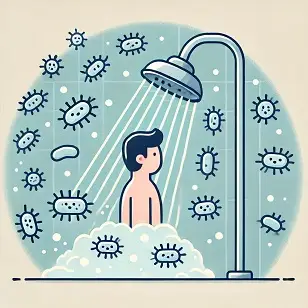
Showerheads and hoses are of particular interest because water passing through colonised components can become aerosolised. Research supports shower aerosols as a plausible pulmonary exposure route, although it cannot establish that a particular shower caused an individual patient’s disease.
Millions of people inhale shower aerosols without developing NTM lung disease. Host susceptibility and underlying airway conditions remain central.
Environments that may increase exposure
| Environment | Why exposure may occur | Important context |
|---|---|---|
| Residential plumbing | Biofilms, warm water, shower aerosols and low-use outlets | Normal household exposure rarely causes disease in healthy people |
| Large buildings | Complex pipes, water stagnation, long water age and variable temperatures | Water-management design is more important than isolated outlet cleaning |
| Hot tubs and spas | Warm aerated water may generate high concentrations of inhalable droplets | Maintenance quality strongly influences microbial risk |
| Healthcare settings | Water-based equipment or contaminated material can bypass natural body defences | Healthcare outbreaks require formal infection-control and public-health investigation |
| Tattoo and nail premises | Contaminated water, products or equipment may enter damaged skin | Licensed providers and correct sterilisation reduce risk |
| Gardens and construction areas | Soil, compost and dust may become airborne | Dust also irritates the lungs independently of NTM |
Who is at increased risk of NTM infection?
Anyone may encounter NTM, but pulmonary disease occurs disproportionately in people with structural lung damage, reduced mucus clearance or weakened immune defence.
Bronchiectasis
Permanently widened airways retain mucus and make it more difficult to remove inhaled organisms.
Cystic fibrosis
Abnormal mucus, chronic infection and structural lung changes increase susceptibility and complicate treatment.
COPD and emphysema
Damaged airways, smoking-related injury and some corticosteroid exposures may contribute to risk.
Previous tuberculosis
Residual cavities, scarring and airway distortion can create conditions in which NTM disease develops.
Pulmonary fibrosis
Structural lung abnormalities and immunosuppressive treatment may increase susceptibility in selected patients.
Weakened immunity
Transplantation, chemotherapy, advanced HIV and some immune-modifying medicines can increase pulmonary or disseminated disease risk.
Older age
Rates of pulmonary NTM isolation and disease increase with age, partly because structural lung disease becomes more common.
Low body weight
Low BMI and reduced muscle mass are frequently associated with NTM pulmonary disease, although several mechanisms may contribute.
Recent procedures or wounds
Surgery, injections, cosmetic procedures and open wounds can provide routes for skin and soft-tissue infection.
Repeated water-based healthcare exposure
Risk increases when contaminated water or equipment reaches sterile tissue, implants or medical devices.
NTM in cystic fibrosis and non-CF bronchiectasis
People with cystic fibrosis and non-CF bronchiectasis are particularly susceptible because mucus clearance is impaired and the airways may already be structurally damaged.
NTM infection can increase cough, sputum, fatigue, breathlessness and weight loss. It can also produce CT abnormalities that overlap with ordinary bronchiectasis, including small nodules, tree-in-bud change, mucus plugging and cavities.
Regular microbiological monitoring may be important
Patients with bronchiectasis or cystic fibrosis may need sputum sent specifically for mycobacterial culture when symptoms, imaging, weight or exacerbation patterns change. Routine bacterial culture does not adequately test for NTM.
Does a positive sputum result prove NTM lung disease?
No. NTM are common environmental organisms and may appear transiently in respiratory samples. Diagnosis usually requires evidence from symptoms, imaging and microbiology.
- Review symptoms Relevant symptoms may include chronic cough, sputum, breathlessness, fatigue, fever, night sweats, weight loss or coughing blood.
- Assess chest imaging CT may show nodular bronchiectatic disease, tree-in-bud change, cavities, consolidation or progressive structural abnormalities.
- Collect appropriate samples Multiple sputum samples are commonly requested because one positive result may represent transient contamination.
- Identify the species Different NTM species vary markedly in pathogenicity, expected progression and antibiotic susceptibility.
- Exclude alternative causes Bacterial infection, aspiration, fungal disease, cancer and inflammatory disorders can produce similar symptoms or imaging.
- Decide whether treatment is needed Even when diagnostic criteria are met, immediate treatment is not automatically appropriate for every patient.
How can environmental exposure be reduced?
NTM cannot be completely removed from everyday life. Preventive advice should be proportionate to the person’s susceptibility, disease severity and quality-of-life priorities.
Avoid poorly maintained hot tubs
High-risk individuals may choose to avoid spas or hot tubs where water quality and maintenance are uncertain.
Reduce heavy aerosol exposure
Avoid prolonged exposure to fine mist, steam or heavily aerosolised recreational water when practical.
Maintain shower fixtures
Remove visible scale and debris according to manufacturer instructions and replace damaged or heavily fouled components.
Use the correct water for medical devices
Use sterile water where specified for nebulisers, humidification or other respiratory equipment.
Limit dusty gardening exposure
Dampen dry soil, avoid shaking compost and consider a well-fitting mask during particularly dusty work.
Protect cuts and wounds
Wear gloves when appropriate, clean injuries promptly and seek review for persistent redness, nodules, swelling or drainage.
Choose regulated providers
Use appropriately licensed medical, tattoo, cosmetic and nail providers that follow sterilisation and infection-control standards.
Support airway clearance
For people with bronchiectasis, effective mucus clearance may be more important than trying to eliminate every environmental exposure.
Household precautions have limitations
- No showerhead, domestic filter or cleaning method has been proven to prevent all NTM pulmonary disease.
- Raising water temperatures can create scalding and other water-safety risks.
- Poorly maintained filters may themselves become contaminated.
- Stopping normal washing, gardening or outdoor activity may reduce independence and quality of life without proven benefit.
Preventing healthcare-associated NTM infection
Healthcare and public-health controls are particularly important because contaminated water or equipment may introduce organisms directly into wounds, sterile tissue or medical devices.
When specialist respiratory assessment may help
Repeated positive NTM cultures
Repeated isolation should be interpreted alongside symptoms, CT findings and the pathogenicity of the species.
Bronchiectasis with clinical decline
Increasing cough, sputum, fatigue, weight loss or haemoptysis may require investigation for NTM and other causes.
New nodules or cavities
CT abnormalities may require sputum testing, bronchoscopy or investigation for fungal infection, malignancy or aspiration.
Difficulty interpreting prevention advice
Specialist discussion can help balance theoretical exposure reduction against mobility, independence and quality of life.
Learn more about specialist assessment and treatment of NTM lung disease .
When urgent medical assessment is needed
Seek prompt help for significant deterioration
- Heavy or increasing coughing of fresh blood
- Severe or rapidly worsening breathlessness
- A marked fall in oxygen saturation
- High fever, confusion or severe weakness
- Chest pain with breathlessness or fainting
- Inability to maintain fluids or nutrition
- New respiratory symptoms during chemotherapy, transplantation or intensive immunosuppression
Call 999 for severe breathing difficulty, collapse, heavy bleeding or another immediately life-threatening symptom.
Conclusion
Nontuberculous mycobacteria occur naturally in water, soil, dust and moist built environments. Common potential sources include showerheads, taps, plumbing biofilms, hot tubs, hydrotherapy equipment, ice machines and soil.
Pulmonary exposure most plausibly occurs through inhalation of aerosolised water or dust and, in some patients, aspiration. Skin and postoperative infection can develop when contaminated material enters wounds or surgical sites.
Most NTM disease is environmentally acquired rather than spread between people. However, transmission of some Mycobacterium abscessus strains has been reported in cystic-fibrosis settings.
Exposure alone rarely explains the whole story. Bronchiectasis, cystic fibrosis, COPD, previous tuberculosis, immune suppression and other host factors make disease more likely.
It is usually impossible to identify the exact tap, shower, soil source or event responsible for an individual infection. A patient should therefore not assume that they caused the illness through a particular everyday activity.
Practical precautions can reduce selected exposures, but extreme household restrictions have uncertain benefit. Effective airway clearance, appropriate microbiological monitoring and specialist interpretation remain central for patients with suspected or confirmed NTM pulmonary disease.
Frequently asked questions
Where did I get my NTM infection?
NTM are commonly found in water, soil and dust. It is usually not possible to prove the exact environmental source for an individual patient.
Did I catch NTM from another person?
Most NTM disease is environmentally acquired. Ordinary person-to-person transmission is uncommon, although some transmission of M. abscessus has been reported in cystic-fibrosis settings.
Can I catch NTM from my shower?
Shower water can contain NTM and showering can create inhalable aerosols. This is a plausible exposure route, but it does not prove that a particular shower caused the infection.
Should I stop showering?
Not routinely. Some high-risk patients may choose to reduce fine mist or prolonged steam exposure, but complete avoidance has not been shown to prevent all NTM disease.
Is tap water safe?
Municipal tap water may contain NTM, but routine exposure does not cause disease in most people. Sterile water should be used where specifically required for medical or respiratory equipment.
Should I install a shower filter?
Some correctly specified filters may reduce organisms at one outlet, but they require regular replacement and have not been proven to prevent all NTM pulmonary disease.
Is gardening safe?
Gardening can often continue. Damping dry soil, avoiding clouds of compost dust, wearing gloves and considering a well-fitting mask for dusty work are proportionate measures.
Does one positive sputum culture mean I have NTM lung disease?
Not usually. Diagnosis requires compatible symptoms, imaging and appropriate microbiological evidence. Multiple samples are often required.
Why do people with bronchiectasis develop NTM?
Bronchiectasis causes mucus retention and impaired clearance of inhaled organisms. This creates an airway environment in which NTM may persist.
Can NTM come from a medical or cosmetic procedure?
Yes. Healthcare, tattoo and cosmetic outbreaks have occurred when contaminated water, products or equipment entered wounds or sterile tissue.
Can environmental precautions cure NTM disease?
No. Environmental precautions may reduce selected future exposures but do not treat established pulmonary disease. Treatment decisions require specialist assessment.
References and further information
- Centers for Disease Control and Prevention. About nontuberculous mycobacteria infections. View CDC patient information
- Centers for Disease Control and Prevention. Clinical overview of nontuberculous mycobacteria. View CDC clinical information
- Centers for Disease Control and Prevention. About Mycobacterium abscessus. View CDC information
- Haworth CS, Banks J, Capstick T, et al. British Thoracic Society guidelines for the management of non-tuberculous mycobacterial pulmonary disease. Thorax. 2017;72(Suppl 2):ii1–ii64. View the BTS guideline
- Daley CL, Iaccarino JM, Lange C, et al. Treatment of nontuberculous mycobacterial pulmonary disease: an official ATS/ERS/ESCMID/IDSA clinical practice guideline. Clinical Infectious Diseases. 2020;71:905–913. View the international guideline
- Centers for Disease Control and Prevention. Public-health strategies for preventing NTM outbreaks. View CDC outbreak guidance