
Nutrition, healthy weight and respiratory wellbeing
Bronchiectasis Diet: Evidence-Based Nutritional Tips
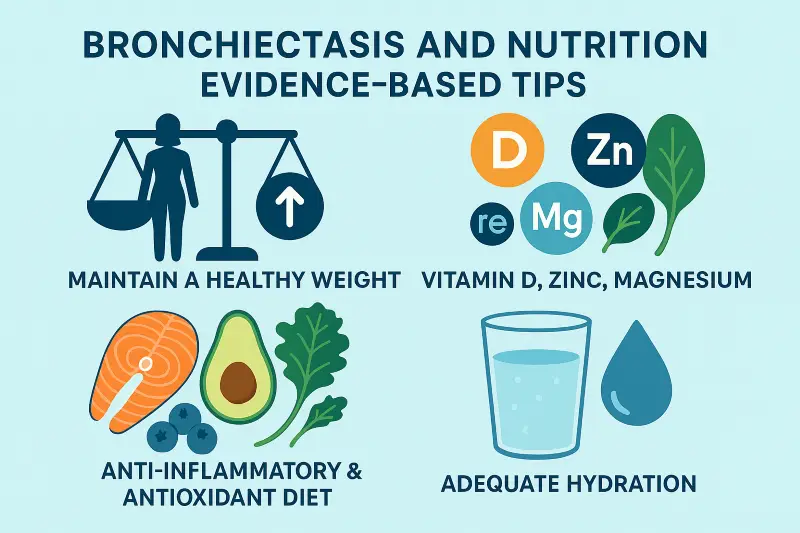
There is no single diet that treats bronchiectasis. However, maintaining a healthy weight, preserving muscle, eating enough protein, correcting genuine deficiencies and planning for exacerbations can support respiratory health and recovery.
- Healthy weight
- Protein
- Vitamin D
- Zinc and magnesium
- Hydration
- Flare-up nutrition
Food first where possible
A varied diet can provide protein, energy, fibre, vitamins and minerals. Supplements are most useful when there is a defined deficiency, restricted intake or another clinical indication.
Nutrition should be personalised
Advice changes when someone is underweight, overweight, losing muscle, taking corticosteroids, living with reflux, or managing kidney, cardiac or metabolic disease.
What is bronchiectasis and why does nutrition matter?
Bronchiectasis is a chronic lung condition in which parts of the airways become permanently widened. Abnormal airways are more likely to retain mucus, contributing to recurrent infection, inflammation and further airway damage.
Bronchiectasis can affect nutritional health in several ways. The work of breathing may be greater, chronic inflammation and infection may increase metabolic demand, and exacerbations can reduce appetite at the same time that the body needs energy for recovery.
Breathlessness, fatigue, coughing, reflux and a prolonged treatment routine may also make preparing or eating meals more difficult.
Learn more about bronchiectasis diagnosis and treatment .
Healthy weight, muscle mass and malnutrition
Body mass index provides a useful starting point, but weight alone does not show how much muscle a person has. Someone can have a normal or high BMI while still losing skeletal muscle.
Useful warning signs include unplanned weight loss, looser clothing, reduced grip strength, difficulty rising from a chair, reduced appetite and declining ability to exercise or complete airway clearance.
When weight is low or falling
- Use three smaller meals with nourishing snacks.
- Add olive oil, avocado, nut butter or grated cheese.
- Include protein at each meal and snack.
- Choose full-fat products when clinically suitable.
- Consider oral nutritional supplements with dietetic advice.
- Investigate persistent appetite loss or weight loss.
When gradual weight loss is appropriate
- Avoid highly restrictive or rapid-loss diets.
- Preserve protein intake and resistance exercise.
- Reduce excess calories from low-nutrient foods first.
- Use portion changes that remain sustainable.
- Consider breathlessness and mobility limitations.
- Seek dietetic support when other conditions coexist.
Weight trend, muscle strength, appetite, exercise capacity and recovery from exacerbations can be more informative than one BMI measurement.
Evidence for key dietary and micronutrient factors
Energy and protein
Core nutritional principleWhy it matters
Protein supports muscle, immune function and tissue repair. Adequate energy prevents the body from using protein as a primary energy source.
Food sources
Fish, poultry, eggs, dairy foods, tofu, beans, lentils, nuts, seeds and fortified alternatives can contribute.
Practical approach
Spread protein through meals and snacks. Requirements may increase during illness, rehabilitation or recovery from weight loss.
Vitamin D
Association evidenceWhat is known
Low vitamin D has been associated with bacterial infection, more severe bronchiectasis and poorer lung outcomes. Observational association does not prove treatment benefit.
Food sources
Oily fish, egg yolk and appropriately fortified foods can contribute, although diet alone may not correct marked deficiency.
Practical approach
Test 25-hydroxyvitamin D when clinically indicated and correct deficiency using an appropriate medically agreed regimen.
Zinc
Limited bronchiectasis evidenceWhy it matters
Zinc contributes to normal immune-cell function, wound healing and antioxidant defence.
Food sources
Meat, poultry, shellfish, dairy products, legumes, nuts, seeds and fortified foods provide zinc.
Practical approach
Avoid routine high-dose supplementation. Excess zinc can cause adverse effects and interfere with copper balance.
Magnesium
Indirect evidenceWhy it matters
Magnesium supports normal nerve and muscle function, including respiratory-muscle function.
Food sources
Green leafy vegetables, beans, whole grains, nuts, seeds and some dairy products contain magnesium.
Practical approach
Supplement only for a defined indication. Kidney disease, diarrhoea and medicine interactions affect safety.
Fruit, vegetables, fibre and omega-3 foods
General-health evidencePossible value
A minimally processed dietary pattern supports cardiometabolic health, bowel function and micronutrient intake.
Food sources
Include varied fruit, vegetables, beans, whole grains, olive oil, nuts, seeds and oily fish where suitable.
Evidence limitation
It remains uncertain whether antioxidant or omega-3 supplements reduce bronchiectasis exacerbations or disease progression.
Practical tips for personalising a bronchiectasis diet
Work with a dietitian
Specialist advice is particularly useful with weight loss, reduced appetite, diabetes, kidney disease, food intolerance, swallowing problems or complex supplements.
Prioritise protein
Include a suitable protein source at meals and snacks instead of relying on one large portion at the end of the day.
Choose nutrient-dense foods
When appetite is limited, foods providing energy, protein, vitamins and minerals may be more useful than bulky low-energy choices.
Use variety and colour
Different fruits, vegetables, legumes and whole grains provide a broader range of fibre and micronutrients.
Stay appropriately hydrated
Regular fluid intake may support hydration and secretion management, but intake must follow any heart, kidney or fluid restriction.
Support bone health
Review calcium, vitamin D, resistance or weight-bearing activity and fracture risk, especially with systemic corticosteroid exposure.
Consider reflux
Smaller meals and avoiding lying down after eating may help. Trigger foods vary and blanket food exclusions are rarely necessary.
Pair diet with exercise
Protein intake is most effective for preserving muscle when combined with appropriate physical activity or pulmonary rehabilitation.
Food texture and breathlessness
Softer foods, smaller bites, slower eating and resting before a meal can help when chewing or eating causes breathlessness. Persistent coughing or choking during meals requires swallowing assessment rather than dietary adaptation alone.
Hydration and mucus clearance
Dehydration can make secretions feel thicker and may worsen fatigue, headache or constipation. Regular drinks throughout the day are therefore sensible for many patients.
However, there is no single fluid target suitable for everyone. Requirements vary with body size, temperature, activity, fever, diarrhoea, medication, kidney function and heart function.
Hydration complements rather than replaces airway clearance
Drinking fluid does not replace a respiratory physiotherapy programme, prescribed nebulised treatment or appropriate management of a chest infection.
Read more about airway-clearance devices and physiotherapy .
Nutrition during a bronchiectasis exacerbation
Appetite may fall during an exacerbation because of fever, fatigue, breathlessness, altered taste, antibiotics or gastrointestinal symptoms. At the same time, inflammation and recovery may increase nutritional demand.
- Reduce the effort required to eat Use prepared meals, softer foods and convenient nourishing options when shopping or cooking is difficult.
- Eat little and often Smaller meals and snacks may be easier than three large meals.
- Keep protein visible Add eggs, yoghurt, cheese, fish, chicken, tofu, beans or another tolerated protein source.
- Increase energy density when needed Add olive oil, avocado, nut butter, milk powder or another appropriate energy source without greatly increasing portion size.
- Maintain fluids Use regular drinks unless a clinician has prescribed a fluid restriction.
- Review persistent decline Seek dietetic or medical assessment when appetite, weight or strength does not recover after the exacerbation.
Keeping easy meals, suitable snacks and shelf-stable protein foods available can reduce nutritional decline when symptoms suddenly worsen.
Bone health, vitamin D and corticosteroid exposure
Bronchiectasis may coexist with factors that increase osteoporosis risk, including low body weight, reduced physical activity, vitamin D deficiency, menopause, older age and systemic corticosteroid exposure.
| Factor | Why it matters | Possible response |
|---|---|---|
| Vitamin D deficiency | May impair calcium regulation, bone mineralisation and muscle function | Test when indicated and correct deficiency medically |
| Low calcium intake | May limit the calcium available for normal bone maintenance | Review dairy, fortified alternatives and other calcium foods |
| Systemic corticosteroids | Increase bone loss and fracture risk, particularly with repeated or prolonged exposure | Use the lowest clinically appropriate dose and assess bone protection |
| Low weight or muscle loss | Reduces mechanical loading and may increase frailty and falls | Improve nutrition, protein intake and suitable resistance activity |
What the evidence does not yet show clearly
No proven bronchiectasis diet
No particular named diet has been shown in large trials to reverse airway damage or reliably prevent exacerbations.
Limited supplement trials
There are relatively few large randomised trials of micronutrient supplementation specifically in bronchiectasis.
Association is not causation
A low nutrient level may reflect severe illness, reduced activity or poor intake rather than directly causing worse bronchiectasis.
More is not necessarily better
Supplement doses above those needed to correct deficiency may provide no benefit and can cause toxicity or interactions.
Dairy does not need routine exclusion
Some people perceive a temporary coating sensation, but routine dairy avoidance is not an established treatment for airway mucus.
“Detox” claims are unsupported
Restrictive cleanses, extreme fasting and high-dose supplement regimens can worsen nutritional risk without treating bronchiectasis.
Sample bronchiectasis meal plan
This example illustrates a balanced pattern rather than a prescriptive diet. Portions and food choices should reflect energy requirements, culture, preference, allergy and other medical conditions.
Oat porridge with milk or fortified plant milk, berries, yoghurt and nuts or seeds.
Yoghurt with fruit, or a smoothie containing milk or yoghurt, fruit and nut butter. Protein powder should be used only when suitable and advised.
Chicken, fish, eggs, tofu or legumes with a wholegrain carbohydrate, colourful vegetables and olive oil or avocado.
Fruit with nuts, hummus with wholegrain crackers, or cheese with crackers and vegetable sticks.
Oily fish where suitable, or another protein source, with vegetables and potatoes, rice, pasta or another carbohydrate.
Yoghurt, milk, cheese, nut butter or another protein-rich snack. Avoid eating close to bedtime when this aggravates reflux.
Increase or reduce portions according to the goal
A person trying to regain weight may need larger portions, added healthy fats or nourishing drinks. Someone pursuing gradual weight loss may use smaller portions while maintaining protein and vegetable intake.
When to ask for dietitian support
Request nutritional assessment when there is concern about:
- Unintentional or continuing weight loss
- Low BMI or reduced muscle strength
- Persistent loss of appetite
- Difficulty chewing or swallowing
- Coughing or choking during meals
- Frequent exacerbations with slow nutritional recovery
- Pressure to follow a restrictive diet
- Multiple supplements or possible interactions
- Kidney disease, diabetes, heart failure or another condition
- Need for oral nutritional supplements or tube feeding
Conclusion
There is no single diet or supplement proven to treat bronchiectasis. The most useful nutritional approach is personalised, practical and focused on maintaining healthy weight, muscle, adequate energy and sufficient protein.
Vitamin D deficiency should be identified and corrected when clinically appropriate. Zinc, magnesium, antioxidant and omega-3 foods can form part of a varied diet, but routine high-dose supplementation is not supported by strong bronchiectasis-specific evidence.
Regular fluid intake may support general hydration and secretion management, but fluid advice must be adjusted for kidney, cardiac and other medical conditions.
During an exacerbation, small frequent meals, protein-rich foods and energy-dense options can reduce weight and muscle loss.
Nutrition works alongside—not instead of—airway clearance, exercise, vaccination, sputum-guided infection treatment and specialist bronchiectasis care.
Frequently asked questions
Is there a special diet for bronchiectasis?
No single diet has been shown to treat bronchiectasis. A balanced, minimally processed dietary pattern should be adapted to weight, appetite, muscle mass, activity, reflux and other medical conditions.
Should people with bronchiectasis avoid dairy?
Routine dairy avoidance is not supported as a bronchiectasis treatment. Dairy foods can provide protein, energy, calcium and vitamin D. Avoid them only for allergy, intolerance, preference or another individual reason.
Should I take vitamin D?
Vitamin D deficiency should be corrected, but the correct dose depends on the measured level, bone health, kidney function and other factors. Discuss testing and treatment with a healthcare professional.
Do zinc or magnesium supplements prevent chest infections?
There is insufficient bronchiectasis-specific evidence to recommend routine supplementation for this purpose. Supplementation may be appropriate when deficiency or another clinical indication is present.
How much protein do I need?
Requirements vary with body size, age, kidney function, activity, muscle loss and illness. A dietitian can calculate an individual target, particularly when weight is low or recovery is difficult.
Does drinking more water clear mucus?
Maintaining hydration may prevent secretions becoming more difficult to manage, but extra water is not a substitute for airway clearance or prescribed treatment. Some patients need a fluid restriction.
What should I eat during a chest infection?
Small frequent meals, soft foods, protein-rich snacks and energy-dense choices may be easier when appetite is reduced. Maintain fluids where appropriate and seek help if intake or weight continues to decline.
Can nutrition cure bronchiectasis?
No. Bronchiectasis represents permanent structural airway change. Nutrition can support muscle, immunity, bone health and recovery but cannot reverse widened airways.
When should I see a dietitian?
Seek support for unplanned weight loss, low weight, declining muscle strength, limited appetite, swallowing difficulty, restrictive diets or complex medical conditions affecting food and fluid intake.
References and further information
- Chalmers JD, et al. European Respiratory Society clinical practice guideline for the management of adult bronchiectasis. European Respiratory Journal. 2025. View the 2025 ERS guideline
- Hill AT, et al. British Thoracic Society guideline for bronchiectasis in adults. Thorax. 2019;74(Suppl 1):1–69. View the BTS guideline
- Chalmers JD, McHugh BJ, Docherty C, et al. Vitamin-D deficiency is associated with chronic bacterial colonisation and disease severity in bronchiectasis. Thorax. 2013;68:39–47. View the vitamin D study
- Herrero-Cortina B, et al. European Respiratory Society statement on airway-clearance techniques in adults with bronchiectasis. European Respiratory Journal. 2023. View the airway-clearance statement