Tuberculosis infection, diagnosis, prevention and treatment
Tuberculosis: A Comprehensive Guide
Tuberculosis, commonly called TB, is an infectious disease caused by bacteria in the Mycobacterium tuberculosis complex. It most often affects the lungs but can involve almost any part of the body. TB is preventable and usually curable, but delayed diagnosis and drug resistance remain major global health challenges.
- Active TB
- Latent TB infection
- Symptoms
- Testing
- Treatment
- Drug resistance
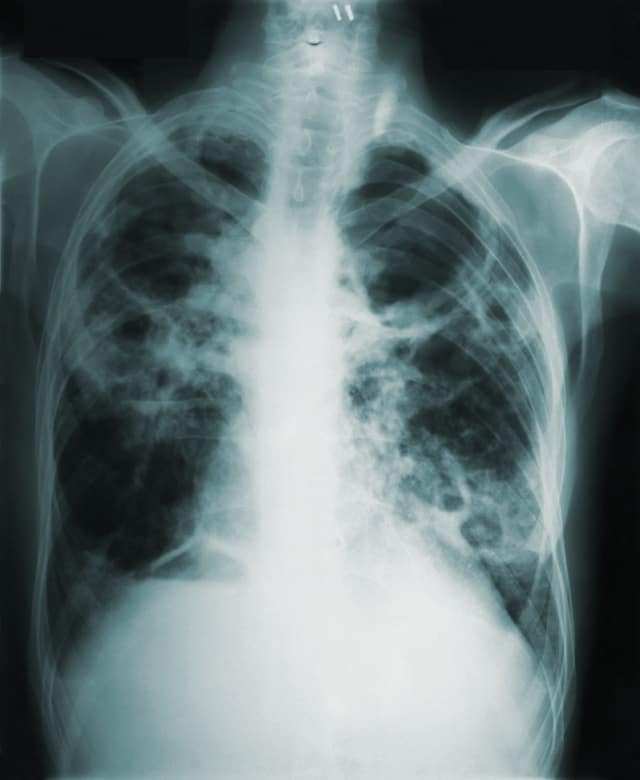
TB is usually curable
Most drug-sensitive TB can be cured when the correct combination of antibiotics is taken for the full prescribed course.
A persistent cough needs assessment
Seek medical advice for a cough lasting more than three weeks, particularly with fever, night sweats, weight loss or blood in the sputum.
What is tuberculosis?
Pulmonary TB affects the lungs and is the form most likely to spread to other people. TB can also involve lymph nodes, bones, joints, kidneys, the abdomen, the brain and meninges, or other organs.
Disease may develop soon after exposure or years later if a previously controlled infection becomes active. The outcome depends on the intensity of exposure, bacterial factors, immune function, age and underlying health.
Pulmonary TB
TB affecting the lungs may cause cough, sputum, haemoptysis, fever, weight loss and characteristic chest-imaging changes.
Extrapulmonary TB
Infection outside the lungs can affect lymph nodes, bones, kidneys, the abdomen, heart lining or nervous system.
Disseminated TB
Bacteria may spread through the bloodstream to several organs, particularly when immune defences are weakened.
The global burden of tuberculosis
10.7 million cases
This was the estimated number of people who developed TB worldwide during 2024.
1.23 million deaths
TB remained a leading cause of death from a single infectious agent.
Unequal burden
TB disproportionately affects communities experiencing poverty, undernutrition, overcrowding and limited healthcare access.
Drug resistance
Resistant TB remains a major antimicrobial-resistance and public-health challenge.
High-burden countries include India, Indonesia, China, the Philippines, Pakistan, Nigeria and South Africa, although TB can occur in every country.
TB in the UK
TB is less common in the UK than in many global regions, but imported infection, local transmission and reactivation of latent infection still occur. Suspected and confirmed TB must be reported to public-health authorities.
How does tuberculosis spread?
TB spreads through the air when a person with infectious pulmonary or laryngeal TB coughs, speaks, sings or sneezes. Tiny airborne particles containing bacteria can remain suspended and be inhaled by others.
Bacteria enter the air
A person with infectious pulmonary TB releases microscopic particles while coughing or speaking.
Another person inhales them
Risk rises with close, prolonged indoor exposure and poor ventilation.
Infection may be contained
The immune system may control the bacteria without producing symptoms or infectiousness.
Active disease may develop
Disease can develop soon after infection or later if immune control weakens.
Transmission is more likely when:
- contact is close and prolonged;
- the room is enclosed or poorly ventilated;
- the source patient has pulmonary or laryngeal TB;
- the bacterial burden in sputum is high;
- effective treatment has not yet begun.
TB is not usually spread by:
- shaking hands;
- sharing plates or cutlery;
- toilet seats;
- casual brief contact;
- touching objects used by someone with TB.
Latent TB is not contagious
A person with latent TB infection has no active symptoms and cannot pass TB to other people.
Latent TB infection versus active TB disease
| Feature | Latent TB infection | Active TB disease |
|---|---|---|
| Symptoms | No TB symptoms | Symptoms may be pulmonary or affect another organ |
| Contagiousness | Not contagious | Pulmonary or laryngeal TB may be infectious |
| Chest imaging | Usually no evidence of active disease | May show consolidation, cavities, nodules or other changes |
| Microbiology | Respiratory samples do not show active TB bacteria | Molecular testing, microscopy or culture may detect TB |
| Treatment goal | Prevent future active disease | Cure disease and prevent transmission, relapse and resistance |
Read more in the London Chest Specialist guide to latent tuberculosis infection .
A positive skin or blood test does not prove active TB
Mantoux and interferon-gamma release assays indicate immune recognition of TB bacteria. Symptoms, imaging and microbiological investigations are required to assess whether active disease is present.
Signs and symptoms of tuberculosis
TB symptoms often develop gradually over several weeks or months. Some patients have mild or non-specific symptoms, particularly when older or immunocompromised.
Persistent cough
A cough lasting longer than three weeks may be dry or productive.
Sputum or blood
Pulmonary TB may cause phlegm, blood-streaked sputum or haemoptysis.
Fever and night sweats
Low-grade fever, drenching night sweats and chills may occur.
Weight loss
Reduced appetite and unexplained weight loss are important warning symptoms.
Fatigue
Persistent tiredness, weakness and reduced exercise tolerance are common.
Chest pain
Pain may occur with lung inflammation, pleural disease or repeated coughing.
Extrapulmonary symptoms
Lymph-node TB
Painless or slowly enlarging glands may develop, commonly in the neck.
Bone or joint TB
Persistent pain, swelling, reduced movement or spinal symptoms can occur.
Abdominal TB
Abdominal pain, swelling, altered bowel habit or weight loss may develop.
TB meningitis
Severe headache, confusion, neck stiffness, vomiting, seizures or neurological weakness require emergency assessment.
When to seek urgent help
Seek urgent GP or NHS 111 advice for blood in the sputum. Call 999 or attend A&E for severe breathing difficulty, substantial haemoptysis, seizure, sudden confusion, weakness, a severe headache with neck stiffness, or marked sensitivity to light.
Who is at greater risk of tuberculosis?
Close contact
Household and prolonged close contacts of infectious pulmonary TB are at increased risk.
Residence or travel
Risk is higher after living in or prolonged travel to countries with a high TB incidence.
HIV
HIV substantially increases the risk that infection will progress to active disease.
Immune suppression
Transplant medicines, chemotherapy, biological treatment and corticosteroids can increase susceptibility.
Diabetes
Diabetes is associated with a higher risk of active TB and poorer treatment outcomes.
Undernutrition
Poor nutrition can weaken immune defence and complicate recovery.
Congregate settings
Prisons, shelters, crowded accommodation and some healthcare settings can increase exposure.
Silica exposure
Silicosis and occupational silica exposure significantly increase TB risk.
Age and frailty
Older adults may have atypical symptoms and additional risks from treatment interactions or side effects.
How is tuberculosis diagnosed?
Clinical assessment
Symptoms, contacts, travel, immune status and previous TB treatment are reviewed.
Imaging
Chest X-ray is commonly used first, with CT or other imaging when more detail is needed.
Respiratory samples
Sputum or bronchoscopy samples are tested by molecular methods, microscopy and culture.
Resistance testing
Molecular and culture-based testing helps identify antibiotics likely to be effective.
| Test | What it assesses | Important limitation |
|---|---|---|
| Chest X-ray | Lung changes compatible with pulmonary TB | Imaging alone cannot confirm the organism |
| NAAT or rapid molecular test | Detects TB genetic material and may identify resistance | A negative result may not exclude paucibacillary disease |
| Microscopy | Looks for acid-fast bacilli in a clinical sample | Less sensitive than culture and cannot always distinguish TB from other mycobacteria |
| Culture | Confirms viable mycobacteria and supports susceptibility testing | Results can take several weeks |
| Mantoux test | Measures an immune skin response to TB antigens | Cannot distinguish latent from active TB |
| IGRA blood test | Measures immune release of interferon gamma after TB antigen exposure | Cannot determine whether infection is active |
| Biopsy | Examines tissue for inflammation, organisms and culture | Invasive and usually reserved for selected cases |
Treatment may begin before culture confirmation
When symptoms, imaging and clinical risk strongly suggest active TB, specialist teams may start treatment while microbiological results are pending.
Treatment of drug-sensitive tuberculosis
Active TB is treated with several antibiotics at the same time. Combination therapy is essential because a single medicine can rapidly select resistant bacteria.
Isoniazid
A core treatment medicine that is active against rapidly dividing TB bacteria.
Rifampicin
A highly effective medicine with important interactions with many other drugs.
Pyrazinamide
Particularly useful during the early intensive phase of standard treatment.
Ethambutol
Helps protect the regimen while resistance results are being established.
A common standard regimen
Many adults with drug-sensitive pulmonary TB receive isoniazid, rifampicin, pyrazinamide and ethambutol for an initial two-month phase, followed by isoniazid and rifampicin for a further four months. Treatment is adjusted for drug susceptibility, disease site, tolerance, age, pregnancy, organ function and other clinical factors.
Some forms of TB require longer or modified treatment. TB affecting the brain, bones, joints or other specialist sites may need an extended course and additional medicines such as corticosteroids in defined circumstances.
Supporting treatment completion
Patient-centred support
Clear education, accessible appointments and practical support improve treatment completion.
Observed treatment
Directly or video-observed therapy may help selected patients where adherence is difficult or resistance risk is high.
Public-health follow-up
TB teams coordinate contact tracing, infection control and follow-up testing.
Do not stop treatment when symptoms improve
Symptoms often improve before all bacteria have been eliminated. Stopping early can cause relapse, treatment failure and drug resistance.
Drug-resistant tuberculosis
Rifampicin-resistant TB
Resistance to rifampicin is a major warning that a specialist resistant-TB regimen may be required.
Multidrug-resistant TB
MDR-TB is resistant to at least isoniazid and rifampicin, two key first-line medicines.
Additional resistance
Resistance to further drug classes narrows treatment options and increases complexity.
Modern resistant-TB treatment increasingly uses shorter, all-oral regimens containing medicines such as bedaquiline, linezolid, pretomanid, fluoroquinolones or other agents. The exact regimen and duration depend on resistance, previous treatment, disease severity and drug tolerance.
Resistant-TB regimens are not interchangeable
Not every patient is eligible for the same shorter regimen. Treatment should be selected and monitored by a specialist multidisciplinary TB service.
Side effects and monitoring during TB treatment
| Issue | Possible medicine association | What to do |
|---|---|---|
| Liver inflammation | Isoniazid, rifampicin and pyrazinamide | Report jaundice, dark urine, severe nausea, abdominal pain or marked loss of appetite promptly |
| Numbness or tingling | Isoniazid-related peripheral neuropathy | Tell the TB team; pyridoxine is prescribed for people at increased risk |
| Visual change | Ethambutol-related optic toxicity | Report blurred vision or colour-vision change immediately |
| Orange body fluids | Rifampicin | Orange urine, sweat and tears are expected; soft contact lenses may stain |
| Drug interactions | Particularly rifampicin | Review all prescriptions, contraception, anticoagulants, supplements and non-prescription medicines |
| Rash or allergy | Any TB medicine | Seek prompt advice; urgent care is needed for swelling, breathing difficulty or a severe blistering rash |
Food instructions differ between medicines
Do not routinely take every TB medicine with food or milk unless advised. Food can alter the absorption of some medicines. Follow the instructions provided by the prescribing TB team.
Monitoring is individualised
Follow-up may include liver and kidney blood tests, blood counts, visual assessment, ECGs, medicine levels, repeat sputum testing and interval imaging.
Preventing tuberculosis
Early diagnosis
Prompt identification and effective treatment reduce the period during which pulmonary TB can spread.
Contact tracing
Close contacts may be assessed for active disease and latent infection.
Ventilation
Good ventilation and appropriate respiratory precautions reduce airborne transmission in high-risk settings.
BCG vaccination
BCG is offered to selected people at increased risk and is particularly protective against severe childhood TB.
Latent-TB treatment
Preventive antibiotics reduce the chance that latent infection will progress to active disease.
Healthcare infection control
Isolation, suitable masks, negative-pressure rooms and rapid testing may be required for suspected infectious TB.
BCG does not provide complete protection
A vaccinated person can still develop TB. Symptoms and significant exposure should therefore be assessed regardless of vaccination history.
TB, HIV, nutrition and older age
TB and HIV
HIV weakens immune control of TB and increases the risk of disseminated or atypical disease. Coordinated treatment is essential because medicines can interact.
Nutrition
Undernutrition increases TB risk and can delay recovery. Nutritional assessment should accompany medical treatment when weight loss or food insecurity is present.
Older adults
Older people may present with confusion, weakness or functional decline rather than classic symptoms and may require closer monitoring for interactions and toxicity.
Tuberculosis, stigma and public health
Fear and stigma can discourage people from seeking testing, disclosing symptoms or completing treatment. TB is an infection, not a reflection of character, cleanliness or personal worth.
Clear communication
Patients should receive understandable information about transmission, treatment, confidentiality and when normal activities can resume.
Practical support
Housing, transport, nutrition, language services and financial pressures can affect treatment completion and should be addressed compassionately.
Public-health involvement protects patients and communities
Contact tracing and notification are designed to identify people who need testing or preventive treatment while supporting the person receiving TB care.
Frequently asked questions
Is tuberculosis curable?
Yes. Most drug-sensitive TB is curable when the correct combination of medicines is taken for the complete prescribed course. Resistant disease is more complex but can also be treated.
Is everyone with TB contagious?
No. Latent TB is not contagious. Infectiousness is mainly a concern with active pulmonary or laryngeal disease.
How long is someone with pulmonary TB infectious?
This varies with bacterial burden, drug susceptibility, treatment response and adherence. The TB team will advise when isolation or other precautions can end.
Can TB return after treatment?
Relapse or reinfection can occur, although successful treatment greatly reduces the risk. Recurrent symptoms require reassessment and resistance testing.
Does a positive TB blood test mean I have active disease?
No. An IGRA indicates immune sensitisation to TB. Symptoms, examination, imaging and microbiology determine whether active disease is present.
Can I get TB despite having the BCG vaccine?
Yes. BCG reduces the risk of some severe forms, especially in children, but it does not provide complete lifelong protection.
Why are several antibiotics needed?
TB bacteria exist in different metabolic states and can develop resistance rapidly if an ineffective single medicine is used.
Can I drink alcohol during TB treatment?
Alcohol can increase liver toxicity and complicate treatment. Ask the prescribing team for individual advice and avoid alcohol when advised.
Can TB affect organs other than the lungs?
Yes. TB can affect lymph nodes, bones, joints, kidneys, the abdomen, heart lining, brain and many other sites.
When should I see a respiratory specialist?
Specialist assessment is appropriate for persistent symptoms, abnormal imaging, possible TB exposure, positive screening tests, treatment complications or uncertainty about the diagnosis.
Conclusion
Tuberculosis remains a major international health challenge, but it is preventable and usually curable. Early recognition is essential, particularly when a persistent cough occurs with fever, night sweats, fatigue, weight loss or blood in the sputum.
Active and latent TB are different clinical states. Latent infection causes no symptoms and is not contagious, while active pulmonary TB may cause illness and spread through the air.
Diagnosis requires clinical assessment, imaging and specialised microbiology. Skin and immune blood tests help identify infection but cannot determine by themselves whether disease is active.
Successful treatment depends on taking an effective combination of medicines for the full prescribed course, monitoring side effects and coordinating public-health measures such as contact tracing.
People with concerning symptoms or possible exposure can seek assessment through the London Chest Specialist chest infection and respiratory infection service .
References and further information
- World Health Organization. Global Tuberculosis Report 2025. View the WHO report
- National Institute for Health and Care Excellence. Tuberculosis: NICE guideline NG33. View NICE guidance
- NHS. Tuberculosis. Read NHS patient information
- UK Health Security Agency. Tuberculosis diagnosis, screening, management and data. View UKHSA resources
- UK Health Security Agency. Latent TB infection testing and treatment. View latent-TB guidance
- London Chest Specialist. Understanding latent tuberculosis infection. Read the latent-TB guide
- London Chest Specialist. Chest infection diagnosis and treatment. Explore the chest infection service
- London Chest Specialist. Non-tuberculous mycobacterial lung disease. Understand the difference between NTM and TB
Concerned About Tuberculosis or a Persistent Chest Infection?
A specialist respiratory consultation can review symptoms, exposure history, travel, screening results and chest imaging, and advise on the appropriate diagnostic pathway.