
Throat symptoms, chronic cough and multidisciplinary assessment
Understanding Globus Sensation: The Sensation of a Lump in the Throat
Globus sensation is the feeling of a lump, pressure or tightness in the throat when no physical obstruction is present. It is usually harmless, but persistent symptoms can be uncomfortable and anxiety-provoking. Globus may coexist with reflux, laryngeal muscle tension, throat irritation or chronic cough and must be distinguished from genuine swallowing difficulty.
- Lump-in-throat sensation
- Globus versus dysphagia
- Reflux
- Muscle tension
- Chronic cough
- Laryngoscopy
- Speech therapy
- Warning symptoms
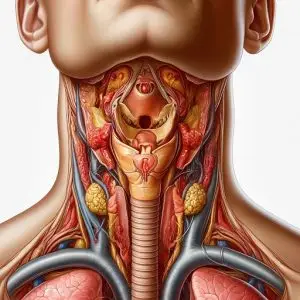
Typical globus does not block swallowing
People with uncomplicated globus can generally eat and drink normally. The sensation is often most noticeable between meals and may improve temporarily while eating or drinking.
Swallowing problems need separate assessment
Food sticking, choking, painful swallowing, weight loss or progressive symptoms are not typical features of simple globus and should be assessed medically.
What is globus sensation?
Globus sensation, also called globus pharyngeus, is a persistent or intermittent feeling of a lump, pressure, tightness or foreign body in the throat when no obstructing lump is present.
The feeling is commonly located in the middle of the throat around the level of the voice box. It may move, fluctuate during the day or become more noticeable when a person focuses on it.
Typical globus is generally painless and does not prevent food or liquids passing normally. Some people notice that it improves while eating, drinking or when attention is directed elsewhere.
Stress, tiredness, repeated throat clearing and heightened awareness of throat sensations may make it more prominent. This does not mean that the symptom is imaginary. The throat and larynx contain sensitive muscles and nerves that can generate genuine and distressing physical sensations.
Isolated globus is usually benign. Assessment is important when symptoms persist, change or occur with swallowing difficulty, weight loss, pain, voice change or another warning feature.
Globus sensation or true swallowing difficulty?
Globus and dysphagia can both be described as something feeling “stuck”, but they are clinically different symptoms. Distinguishing between them helps determine the most appropriate investigation.
Features more consistent with globus
- A lump or tight sensation when not eating
- Food and drink pass normally
- The sensation may improve during meals
- Symptoms fluctuate during the day
- Symptoms may worsen during stress or tiredness
- No progressive weight loss or painful swallowing
Features suggesting dysphagia
- Food or liquid genuinely sticks during swallowing
- Coughing or choking during meals
- Repeated regurgitation of food
- Pain when swallowing
- Symptoms becoming progressively worse
- Unintentional weight loss or recurrent aspiration
Do not assume food sticking is harmless globus
A person who cannot swallow normally may require assessment of the mouth, throat, larynx, oesophagus or swallowing mechanism. The appropriate pathway may involve ENT, gastroenterology and specialist speech and language therapy.
What can cause or contribute to globus sensation?
Globus is a symptom rather than one single disease. More than one factor may be present, and in some patients no single structural cause is identified.
Reflux and oesophageal irritation
Gastro-oesophageal or laryngopharyngeal reflux may irritate the oesophagus or throat. Some patients have heartburn or regurgitation, while others report throat clearing, cough or hoarseness.
Laryngeal muscle tension
Increased tension in the throat, neck or voice-box muscles can create a feeling of pressure, constriction or something being present.
Stress and anxiety
Stress can increase muscle tension, breathing-pattern changes and attention to internal sensations, making globus more prominent.
Throat clearing and irritation
Repeated dry swallowing, coughing or throat clearing can irritate the larynx and reinforce an uncomfortable throat-sensation cycle.
Upper-airway inflammation
Rhinitis, allergies, postnasal symptoms, tonsillar inflammation or a recent throat infection may contribute to irritation or fullness.
Oesophageal motility problems
Abnormal oesophageal movement or upper-oesophageal-sphincter function can occasionally contribute, particularly when swallowing symptoms are also present.
Thyroid or neck abnormalities
Thyroid enlargement, a neck mass or another local structural condition may create pressure and requires clinical examination.
Less common serious conditions
Head-and-neck or oesophageal cancers are uncommon causes of an isolated globus sensation, but warning features must not be ignored.
Reflux is possible, but not automatic
Globus should not automatically be labelled “silent reflux”. Reflux symptoms, risk factors, examination findings and the response to a defined treatment plan should be considered together. Read more about reflux, aspiration and respiratory symptoms .
Globus sensation and chronic cough
Globus, throat clearing and chronic cough can form a self- perpetuating cycle. An uncomfortable throat sensation prompts coughing or clearing, which irritates the larynx and makes the sensation more noticeable.
Some people with chronic cough have an overly sensitive cough reflex. Everyday stimuli such as talking, laughter, perfume, cold air, eating or a minor throat sensation may trigger an disproportionate urge to cough.
This is sometimes described as cough hypersensitivity syndrome . Globus may coexist with cough hypersensitivity, laryngeal sensitivity, reflux, asthma or upper-airway inflammation.
Sensation triggers cough
A tickle or feeling of obstruction can provoke coughing even though there is nothing that needs to be cleared.
Cough irritates the throat
Repeated mechanical contact and airflow can increase laryngeal irritation and muscle tension.
Throat clearing reinforces the cycle
Frequent dry throat clearing provides brief relief but may increase irritation and the future urge to clear.
Anxiety increases awareness
Worry about the sensation can increase monitoring of the throat and make normal sensations feel more intrusive.
A cough lasting more than eight weeks should not be attributed to globus alone. A respiratory assessment may consider asthma, eosinophilic airway disease, infection, medication, reflux, structural lung disease and cough hypersensitivity. Learn more about specialist chronic-cough assessment .
How is globus sensation assessed?
Assessment begins with the symptom pattern and the presence or absence of warning features. Not everyone requires extensive imaging or invasive testing.
- Clarify the sensation The clinician asks where the feeling is located, whether it changes during meals and whether food or liquids genuinely stick.
- Check for warning features Progressive dysphagia, painful swallowing, weight loss, haemoptysis, persistent hoarseness, neck swelling and one-sided symptoms require particular attention.
- Review throat and respiratory symptoms Cough, throat clearing, wheeze, breathlessness, nasal symptoms, voice change and recurrent infection help guide further review.
- Review reflux and swallowing symptoms Heartburn, regurgitation, cough after meals, choking and nocturnal symptoms may suggest an oesophageal or aspiration-related mechanism.
- Review medications and lifestyle Medicines, smoking, alcohol, caffeine, eating patterns and voice demands may influence throat symptoms.
- Examine the mouth, throat and neck Examination may identify tonsillar inflammation, thyroid enlargement, lymph nodes, oral lesions or another physical cause.
- Decide whether specialist input is needed ENT, respiratory medicine, gastroenterology and speech and language therapy may contribute according to the dominant symptoms.
Possible investigations for globus sensation
Testing should be selected according to the history and examination. Normal swallowing with no warning signs may need reassurance and conservative management rather than every available test.
ENT and laryngeal assessment
Clinical examination
The mouth, tongue, tonsils, throat, neck and voice may be assessed for inflammation or structural abnormalities.
Flexible laryngoscopy
A small flexible camera can examine the nasal passages, pharynx, larynx and vocal cords where indicated.
Interpretation
Laryngeal redness alone is not specific for reflux and must be interpreted alongside the clinical history.
Swallowing and oesophageal assessment
Barium swallow
Contrast imaging may be used for selected swallowing or structural concerns but is not required for every person with typical globus.
Upper-GI endoscopy
Endoscopy may be considered for dysphagia, reflux complications, bleeding, weight loss or another gastrointestinal indication.
Swallow assessment
Speech and language therapy assessment may be appropriate where choking, coughing during meals or aspiration is suspected.
Reflux and motility testing
pH-impedance testing
This can measure acid and non-acid reflux when the result is likely to change management.
Oesophageal manometry
Pressure testing may be considered where oesophageal motility or sphincter dysfunction is suspected.
Selective use
These tests are normally reserved for persistent or complex symptoms rather than routine uncomplicated globus.
Respiratory cough assessment
Chest assessment
Persistent cough may require chest examination and imaging according to symptoms and risk factors.
Lung-function testing
Spirometry and airway-inflammation tests may help identify asthma or eosinophilic airway disease.
Cough hypersensitivity
Trigger patterns, throat sensations and the urge to cough may support a laryngeal or sensory hypersensitivity mechanism.
Which specialists may be involved?
| Specialist | When input may be useful | Possible contribution |
|---|---|---|
| Respiratory physician | Persistent cough, wheeze, breathlessness or concern about lower-airway disease | Cough assessment, chest imaging, lung-function testing and cough-hypersensitivity management |
| ENT surgeon | Voice change, one-sided symptoms, neck findings, nasal or laryngeal concerns | Examination of the upper airway and flexible laryngoscopy |
| Gastroenterologist | Dysphagia, regurgitation, troublesome reflux or suspected oesophageal disease | Endoscopy, reflux monitoring, manometry and oesophageal treatment |
| Speech and language therapist | Laryngeal tension, chronic throat clearing, cough hypersensitivity or swallowing concerns | Cough-control, voice, relaxation and swallowing therapy |
| Psychologist or mental-health clinician | Significant anxiety, symptom vigilance or illness-related distress | Cognitive behavioural therapy, stress management and treatment of anxiety or depression |
The aim is not to send every patient to several specialists. The symptom pattern should guide which discipline is most likely to contribute and how the results are combined into one treatment plan.
Management and treatment of globus sensation
Treatment should target the most plausible contributors. When examination is reassuring and there are no warning features, explanation and reassurance are important parts of care.
Reassurance and education
Understanding that typical globus is common and usually benign can reduce fear, muscle tension and repeated checking of the throat.
Reduce repeated throat clearing
Sip water, swallow gently or use a cough-control technique rather than repeatedly clearing the throat forcefully.
Maintain hydration
Regular fluids may reduce dryness and provide an alternative sensation when the urge to clear the throat appears.
Laryngeal relaxation
Speech and language therapy can teach relaxed breathing, posture, voice and throat-release strategies.
Stress-management strategies
Mindfulness, relaxation, counselling or cognitive behavioural therapy may help when stress amplifies the symptom.
Treat nasal inflammation
Allergic rhinitis or chronic nasal symptoms may need appropriate nasal treatment rather than repeated throat medication.
Managing suspected reflux-related globus
Reflux management should be proportionate to the evidence that reflux is contributing. A short, defined treatment trial may be reasonable in someone with typical reflux symptoms, but indefinite medication without benefit should be reviewed.
Avoid large late meals
Allowing time between the evening meal and lying down may reduce nocturnal reflux in susceptible individuals.
Identify personal food triggers
Spicy food, high-fat meals, chocolate, caffeine or alcohol may worsen symptoms for some people but do not need universal exclusion.
Address smoking and weight
Smoking can irritate the throat and promote reflux. Weight reduction may help where excess weight contributes to gastro-oesophageal reflux.
Review medication response
Acid-suppression treatment should have a clear indication, planned duration and review of whether symptoms actually improve.
Proton-pump inhibitors do not treat every globus sensation
Globus may persist when reflux is absent or when laryngeal sensitivity, muscle tension, cough or anxiety is the dominant mechanism. Do not continue or increase reflux medication without reviewing its benefit and the original diagnosis.
Managing globus associated with chronic cough
When globus occurs alongside chronic cough, the treatment plan should address both underlying cough causes and the sensitised cough-throat cycle.
Treat identifiable respiratory disease
Asthma, eosinophilic bronchitis, infection and structural lung disease require their own evidence-based treatments.
Use behavioural cough control
Specialist techniques can help interrupt the urge-to-cough cycle using swallowing, breathing and laryngeal relaxation.
Reduce irritant exposure
Smoke, vaping, perfume, aerosols and cold air may trigger a hypersensitive cough reflex in susceptible individuals.
Review neuromodulatory treatment
Selected patients with refractory cough may be considered for specialist drug treatment only after common causes have been assessed and managed.
A respiratory physician can provide a structured assessment of persistent cough and associated throat symptoms and coordinate ENT, gastroenterology or speech-therapy input where appropriate.
When to seek medical assessment
Arrange a clinical review when:
- the sensation persists or is becoming more intrusive;
- you are repeatedly clearing your throat or coughing;
- you have persistent reflux or regurgitation symptoms;
- there is ongoing hoarseness or voice fatigue;
- the sensation is consistently one-sided;
- you have a new neck lump or thyroid swelling;
- anxiety about the symptom is affecting daily life;
- initial treatment has not helped.
Seek prompt or urgent assessment for:
- progressive difficulty swallowing food or liquids;
- painful swallowing;
- repeated choking or suspected aspiration;
- unintentional weight loss;
- coughing or vomiting blood;
- persistent unexplained hoarseness;
- a growing neck mass;
- severe throat pain or pain radiating to the ear;
- inability to swallow saliva;
- difficulty breathing or swelling of the tongue or throat.
Call 999 for severe breathing difficulty, rapidly developing throat swelling, inability to protect the airway, collapse or another immediately life-threatening symptom.
Conclusion
Globus sensation is the feeling of a lump, pressure or tightness in the throat when no obstructing lump is present. Typical globus does not prevent normal swallowing and may fluctuate with stress, tiredness, throat irritation and attention to the symptom.
Potential contributors include reflux, laryngeal muscle tension, anxiety, throat clearing, upper-airway inflammation and sensory hypersensitivity. More than one mechanism may coexist.
Globus must be distinguished from dysphagia. Progressive food sticking, choking, painful swallowing, weight loss, persistent hoarseness or a neck mass require appropriate investigation.
Evaluation may involve respiratory medicine, ENT, gastroenterology and speech and language therapy. Tests such as laryngoscopy, endoscopy, barium imaging, reflux monitoring or manometry should be selected according to the clinical picture rather than performed routinely for everyone.
Management may include reassurance, reducing throat clearing, hydration, laryngeal relaxation, treatment of confirmed reflux or nasal inflammation, psychological support and specialist cough-control therapy.
When globus accompanies a persistent cough, a specialist respiratory cough assessment can help identify treatable lung or airway causes and coordinate multidisciplinary care.
Frequently asked questions
Is globus sensation dangerous?
Isolated globus with normal swallowing and no warning symptoms is usually benign. Persistent, progressive or atypical symptoms should nevertheless be assessed.
Is there really a lump in the throat?
In typical globus, no obstructing lump is present. The sensation may arise from irritation, muscle tension, sensory hypersensitivity or another functional mechanism.
What is the difference between globus and dysphagia?
Globus is usually felt between meals while swallowing remains normal. Dysphagia means genuine difficulty moving food or liquid from the mouth through the throat or oesophagus.
Can acid reflux cause globus sensation?
Reflux can contribute in some people, particularly when heartburn, regurgitation, hoarseness or other reflux symptoms are present. It is not the cause of every case.
Will a proton-pump inhibitor cure globus?
Not necessarily. Acid suppression may help when acid reflux is contributing, but it may not improve symptoms caused by muscle tension, cough hypersensitivity, anxiety or non-reflux mechanisms.
Can anxiety cause a lump-in-the-throat feeling?
Anxiety and stress can increase throat-muscle tension and awareness of bodily sensations. The resulting symptom is physical and real, even when stress contributes.
Can globus cause chronic cough?
Globus and an urge to clear the throat can trigger coughing. Repeated coughing may then worsen throat irritation and reinforce the sensation.
Why does globus improve when I eat?
Typical globus often becomes less noticeable during normal swallowing because the throat muscles coordinate effectively and attention shifts away from the resting sensation.
Do I need an endoscopy or barium swallow?
Not everyone does. These tests are selected when there are swallowing symptoms, reflux complications, warning features or another specific clinical indication.
Can speech and language therapy help?
Yes. Specialist therapy may help with laryngeal tension, breathing, voice use, repeated throat clearing, cough control and swallowing where relevant.
References and further information
- Hull University Teaching Hospitals NHS Trust. Globus sensation. View the patient information
- University Hospitals Plymouth NHS Trust. Globus pharyngeus. View the NHS guidance
- Salihefendic N, Zildzic M, Cabric E. A lump in the throat: laryngopharyngeal reflux. BMJ. 2020;371:m4091. View the BMJ article
- Harvey PR, Theron BT, Trudgill NJ. Managing a patient with globus pharyngeus. Frontline Gastroenterology. 2018;9:208–212. View the clinical review
- British Thoracic Society. Clinical Statement on Chronic Cough in Adults. View the BTS clinical statement
- London Chest Specialist. Impact of reflux and aspiration on lung disease. Read about reflux, aspiration and respiratory health
- London Chest Specialist. Understanding cough hypersensitivity syndrome. Read about cough hypersensitivity